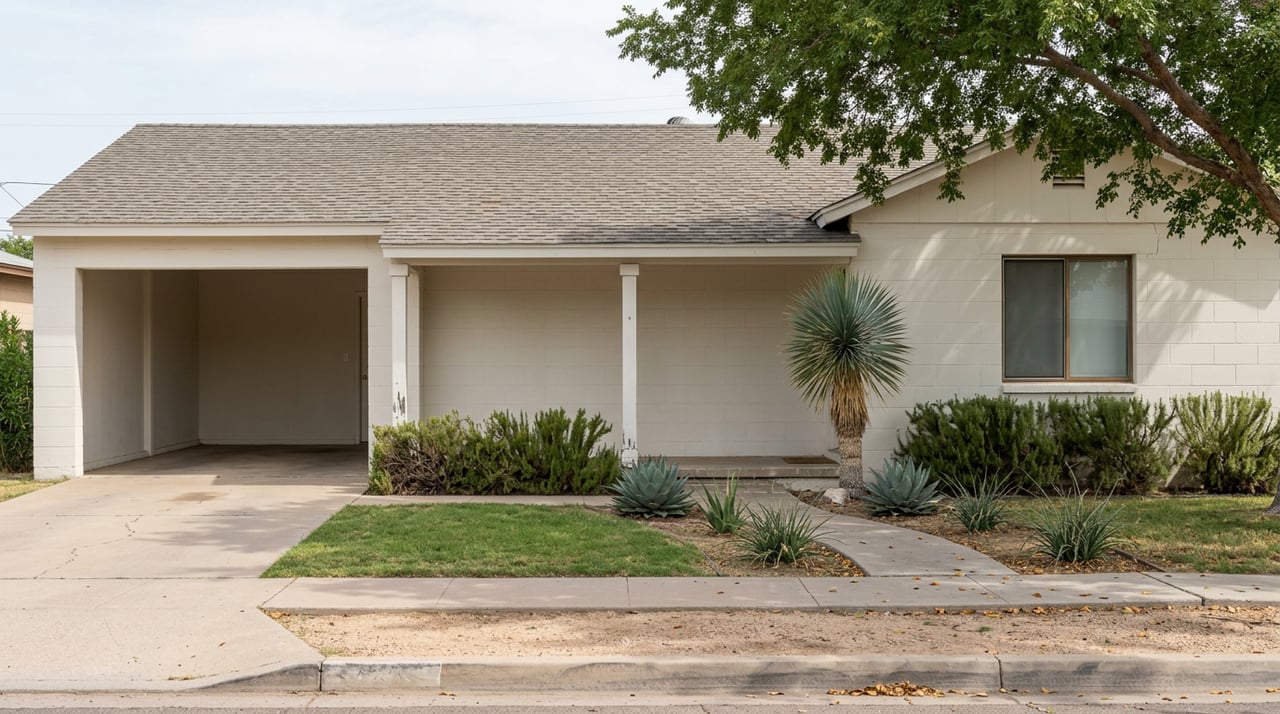
Why the Boulder City Real Estate Market Favors Buyers
August 13, 2026
August 13, 2026
Last October, Toll Brothers walked into a Boulder City Council meeting asking for 60 building allotments across two years, as the Boulder City Review reported. City staff reminded them, again, that the math doesn't work that way. No developer, regardless of size, can pull more than 30 allotments in a single construction year here. Toll Brothers had recently absorbed a smaller builder called StoryBook Homes, and residents who showed up to the meeting wanted to know if that acquisition was a workaround, a way to run two builders' worth of permits through one project called Liberty Ridge. City officials and Toll Brothers' own spokesperson said no, all 60 allotments belonged to one developer and would still be capped at 30 per year. Some residents at the meeting worried the project would turn their end of town into what one commenter, quoted by the Boulder City Review, called a version of Summerlin. That comment matters more than it sounds. It means the person raising it was already comparing Boulder City to the exact kind of large-scale master-planned community it structurally cannot become.
That distinction is useful for buyers comparing Boulder City with Henderson or Summerlin on a portal. The comparison itself is the wrong frame, and the reason is written into city code, not into current demand.
Boulder City's Growth Control Ordinance, part of Title 11 of the municipal code, has capped new residential construction at 120 units citywide per year since 1979. A single developer can obtain no more than half of one year's allotment across any two-year stretch, which in practice means 30 units per construction year, and the city's construction year runs July 1 through June 30, not the calendar year. This isn't a soft target or a planning guideline. It's a legal ceiling that survived a Nevada Supreme Court challenge back in 1994, when a developer named Cinnamon Hills Associates sued the city after being denied a permit for a senior housing project. The court's record confirms the same numbers still in use today: 120 allotments citywide, 30 per developer. The cap has now outlasted more than three decades of valley-wide growth without being rewritten.
Compare that to a Henderson or Summerlin subdivision, where the pace of new construction tracks builder appetite and buyer demand. In Boulder City, the pace tracks a fixed number that a builder cannot outbid, out-market, or out-negotiate. Liberty Ridge, the Toll Brothers project currently working through this allotment process, sits on the far side of a fight that has run since at least December 2021, when the council first considered a 185-home plan for city land near Boulder Creek Golf Club. Residents pushed back, Toll Brothers came back with lower-density options, and the project that eventually emerged carries the Liberty Ridge name today, still releasing homes 30 allotments at a time. Deputy City Manager Michael Mays told the council that Toll Brothers is likely to lose allotments in years when home sales slow, because construction pace is tied to how fast the previous batch sells. A capped supply doesn't guarantee a steady drip. It can slow to a trickle if the market softens, which is exactly what current data suggests is happening right now.
Here's where the story gets interesting for anyone assuming a legal supply cap means a seller's market by default. Homes that closed in the three months ending May 2026 sold for a median of roughly $499,000, about 1.4 percent below the same period a year earlier. Typical time on market nearly doubled over that stretch, moving from 47 days to 76 days. Active listings, which sat in the single digits a few years ago, have climbed past 130 this year, giving buyers a level of selection Boulder City hasn't offered in a long time.
That combination, a legally fixed supply paired with softening prices and slower sales, is not a contradiction. It's a timing gap. A permit cap controls how fast new homes get built. It does nothing to control how fast existing owners decide to sell, how many retirees list a house they've owned for twenty years, or how quickly a buyer pool absorbs what's already on the market. Right now, resale turnover is loosening faster than the 120-unit ceiling would suggest, which is why 2026 looks, for the moment, like a buyer's window in a town that structurally cannot flood itself with new inventory. That window is a function of current listings aging on the market, not a sign that the ordinance has lost its grip. Roughly 200 to 240 homes close here in a full year, which is close to the entire annual turnover of a single Summerlin village. When that few transactions happen, a handful of stale listings or a few slow-selling new builds can swing days-on-market and median price numbers more than they would in a market with thousands of active listings.
Boulder City's appetite for controlling its own growth shows up in more than just the housing count. The city rejected a proposed AI data center this year over environmental and land-use concerns, and the developer, Townsite Solar, responded by pursuing federal Bureau of Land Management land instead, building on an 81-acre plot the city had no say over. Boulder City officials, including Mayor Joe Hardy, have pushed back, and the city council voted to appeal the BLM's approval. Voters are also deciding this November whether to allow data centers on a separate city-owned parcel in the Eldorado Valley. That vote exists because Boulder City's charter requires a public ballot before the city can sell more than one acre of its own land, the same voter-control instinct baked into the 1979 growth ordinance itself.
Contrast that with Boulder, Colorado, a city with a similarly named growth cap that its council voted to remove entirely in 2024 after two decades of officials concluding the ordinance wasn't meaningfully slowing housing costs. Nevada's Boulder City has shown no comparable movement. If anything, the current data center fight suggests the opposite instinct, a town still willing to say no to growth it hasn't voted on, even when that growth comes from a company as large as the one behind the proposal.
If you're comparing Boulder City to Henderson or Summerlin on price alone, you're comparing an elastic market to an inelastic one, and the numbers will keep behaving differently for reasons that have nothing to do with school ratings or amenities. A few practical takeaways for anyone actually transacting here:
Does the growth ordinance affect a home I already own, like an addition or a remodel? No. The FAQ on the city's own site is clear that the ordinance applies to new construction intended for sale, along with new apartments, condos, and hotels. It does not restrict additions to an existing owner-occupied home, according to the city's Growth Control Ordinance FAQ.
When will Liberty Ridge homes actually hit the market? Based on the 30-allotment-per-year limit, expect the project to release in yearly waves tied to how quickly each prior batch sells, not on a fixed construction schedule.
Could Nevada's Boulder City eventually remove its cap like Colorado's Boulder did? Nothing in current reporting suggests that's under discussion. The ordinance has held since 1979, survived a state supreme court challenge in 1994, and the city's recent posture on data centers suggests residents and officials remain protective of local control over growth, not less so.
If you're trying to figure out whether Boulder City's math works for what you're trying to do, whether that's timing a purchase around this year's inventory bump or understanding how a capped-supply market will price out five years from now, that's a conversation worth having with someone who reads Clark County closings for a living. Jenn Taylor and The Taylor Group track these numbers across Boulder City, Henderson, and Lake Las Vegas every week. Request a Personalized Home Valuation and get a straight answer about what your specific situation looks like against this market, not a generic one.
This article is general information, not legal, tax or financial advice. Consult a qualified professional about your situation.




Jenn provides personalized service and expert advice tailored to your unique needs. Start your real estate journey today and achieve your goals with Jenn by your side.